- Canadian & World History
- Posts
- How an 1811 Fur-Trading Deal on Vancouver Island Went Horribly Wrong
How an 1811 Fur-Trading Deal on Vancouver Island Went Horribly Wrong

Epoch Magazine
June 16, 2025

People from the Nootka tribe board the Tonquin in Clayoquot Sound on Vancouver Island in 1811. (Public Domain)
Commentary
By the early 19th century, the coastline of the Pacific Northwest had been reached by expeditions from Russia, Great Britain, Spain, and the United States, all of them eager to exploit the resources of the area and trade with the native tribes. One such venture ended in disaster on the waters off Vancouver Island on June 16, 1811.
In the late summer of 1810, John Jacob Astor, a New York entrepreneur and director of the Pacific Fur Company (PFC), had outfitted the Tonquin, a swift copper-bottomed three-masted ship, to sail to the west coast of North America and establish a trading post. There, men of the PFC would bargain for furs, which would then be sent to China where there was a high demand for such luxury goods. The captain of the vessel was an unemployed U.S. Navy lieutenant named Jonathan Thorn who, although brave, was known to be an iron disciplinarian and hot-tempered. His crew consisted largely of French-Canadian, English, and Scottish sailors and craftsmen.
Astor had two main concerns about the venture. It was, firstly, important to maintain cordial relations aboard the ship during its lengthy voyage. He advised Thorn to ensure “good humour and harmony on board” and counselled his traders to be open about decision-making. Secondly, he warned Thorn about the possibility of violence with the indigenous groups they hoped to deal with, saying, “I must recommend you, to be particularly careful on the coast, and not to rely too much on the friendly disposition of the natives ... all accidents which has as yet happened there arose from too much confidence in the Indians. ... If you find them kind as I hope you will, be so to them. If otherwise, act with caution and forbearance, and convince them that you come as friends.”
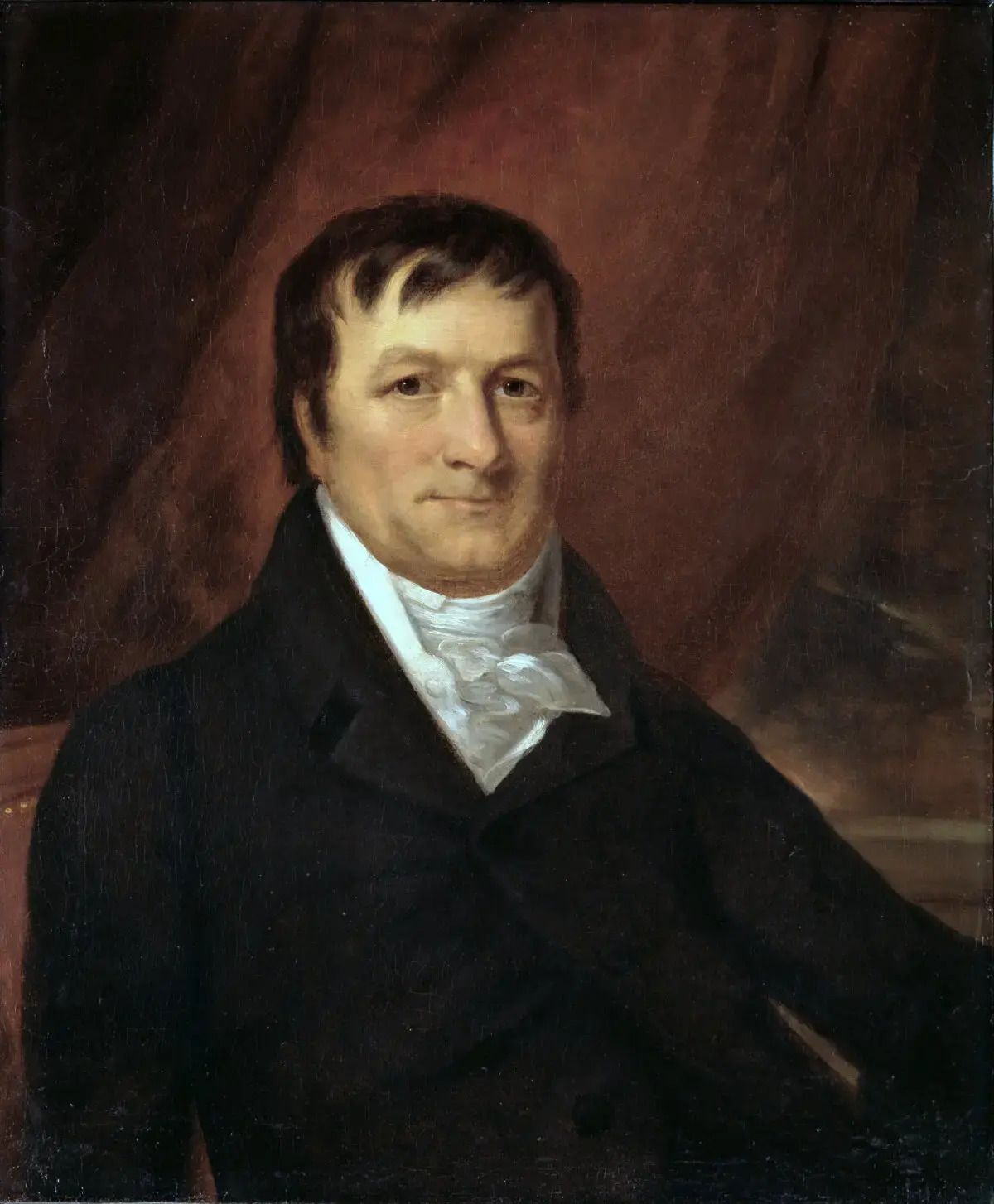 John Jacob Astor, circa 1825. (National Portrait Gallery, Public Domain) | The voyage was a long and dangerous one, marked by deaths among the crew and ill-feeling between the captain and the merchants; at one point, Thorn attempted to sail away and maroon some men on the remote Falkland Islands. The captain was threatened with death and excluded from important discussions. On reaching Oahu, the ship traded for food supplies and native Hawaiians were taken aboard as labourers. In March, the Tonquin reached the mouth of the Columbia River in what is now the state of Oregon, where they built an outpost named Fort Astoria. |
In May, the ship sailed north hoping to find native settlements that would be willing to trade for furs. Reaching Vancouver Island, the Tonquin anchored in Clayquot Sound where Thorn and his crew made contact with people from the Nootka tribe. Negotiations proved to be difficult. In fact, they were so heated that the irascible Capt. Thorn, frustrated at the slowness of the talks, struck Nookamis, an indigenous elder, in the face with a fur skin. This was an ill-advised move because the local chief, Wickaninnish, commanded a large following and his people had a history of assaulting other trading vessels. The natives immediately left the talks and sailed back to the island in their canoes.
Some days later, on June 16, 1811, the Nootka signalled that they were willing to resume bargaining on board the Tonquin. Now, instead of demanding four blankets for every fur pelt, they said they were willing to accept three blankets and a knife for every man. The deal was sealed, and before long dozens of natives stood on the deck armed with new knives, which they promptly used to massacre Thorn and almost all of the crew of the Tonquin. Three traders managed a brief escape in a small open boat before they were captured and tortured to death. A fourth man, the grievously wounded John Lewis, escaped by hiding on the ship.
On the following day, tribesmen returned to loot the ship of its valuable cargo of trade goods. The wounded Lewis then seems to have set a fuse to the Tonquin’s powder magazine, blowing up the ship, killing himself and over 100 Nootka people. Two months later, an indigenous translator who had accompanied the doomed expedition made his way to Fort Astoria with news of the disaster.
The loss of the Tonquin did not deter fur trading between coastal natives and eastern entrepreneurs, but it condemned Astor’s Pacific Fur Company to failure. Before long, the PFC was swallowed up by Montreal’s Northwest Company.